
2026.11.14
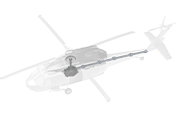
Beluga Airlines W5000 Completes Technical Verification Test Flight with ZT Technology Engine Vibration Isolation System
More



Elastomeric Vibration Isolators in Military Equipment: Resolving the High Damping vs. Longevity Dilemma. Elastomeric vibration isolators are extensively employed in various mechanical systems, playing a particularly critical role in the design and manufacturing of military equipment. By absorbing vibrations and noise, they mitigate operational shocks and oscillations, thereby safeguarding equipment stability and reliability.

The damping coefficient of elastomeric materials directly determines the ultimate vibration isolation performance of these isolators. However, in military applications, elastomeric isolators often face the technical challenge of achieving both high damping performance and extended service life.
This article examines the underlying causes of this performance trade-off and presents potential solutions.
I. The High Damping vs. Longevity Paradox in Elastomeric Isolators
High Damping Requirements:
In military applications, the vibration isolation capability of elastomeric isolators is paramount. Naval gunfire, tank movement-induced vibrations, and missile launch shockwaves all demand effective vibration and shock absorption systems. Uncontrolled vibrations not only compromise weapon accuracy but may also cause structural fatigue damage, adversely affecting battlefield performance.
Longevity Requirements:
Military equipment such as aircraft, naval vessels, and armored vehicles must maintain reliable operation under extreme environmental conditions—including temperature variations, humidity, and salt spray—which impose stringent durability requirements on elastomeric materials. Continuous vibration and shock exposure accelerates material fatigue, leading to cracking, hardening, or even fracture, ultimately compromising system performance.

I. The Trade-Off Between High Damping and Long Service Life in Rubber Isolators
The Need for High Damping:
In defense applications, the damping performance of rubber isolators is critical. For example, the vibration generated by naval gunfire and tank movement, and the shock waves produced by missile launch systems, all require effective damping and shock isolation systems to absorb them. If left uncontrolled, such vibration and shock can degrade weapon accuracy and cause fatigue damage to equipment structures, affecting battlefield performance.

Consequently, military-grade elastomeric isolators must demonstrate exceptional longevity to ensure consistent performance during prolonged missions. However, enhancing material durability in harsh environments typically necessitates compromising damping performance, creating a fundamental engineering contradiction.

II. Resolving the Performance Paradox
Traditionally, achieving both high damping characteristics and extended service life in elastomeric isolators was considered mutually exclusive. However, evolving industry demands necessitate simultaneous improvements in both parameters.
Through comprehensive consideration of damping properties and fatigue resistance in design and application, we implement targeted measures to enhance material longevity while maintaining high damping performance:
1) Material Optimization:
- Nanofiller Technology: Incorporating nanoparticles (e.g., carbon nanotubes, graphene, graphene oxide) into the elastomer matrix enhances damping without significantly compromising elasticity. These nanofillers introduce additional energy dissipation mechanisms while preserving structural integrity.
- Molecular Engineering: Developing specialized polymer architectures—such as long-chain branching or star-shaped molecular structures—through advanced molecular design improves both fatigue resistance and damping performance. High-throughput screening techniques enable optimal material combinations by precisely controlling damping and fatigue characteristics at the molecular level.
- Advanced Manufacturing: Precision manufacturing techniques like directional curing and laminated processing allow meticulous control over microstructural properties.

2) Structural Design Optimization:
Multilayer composite designs represent an effective strategy for balancing performance requirements. By engineering each elastomeric layer to address specific frequency and stress conditions, these structures distribute vibrational stresses more evenly, reducing localized fatigue damage.

III. Technological Breakthroughs and Applications
The application of elastomeric isolators in military equipment imposes exceptionally rigorous demands for both high damping and longevity—a longstanding technical challenge. Through persistent research in material modification and structural optimization, we have developed viable solutions that deliver both efficiency and durability under extreme conditions.
ZT Technology's proprietary series of high-damping, long-life elastomeric isolators have been successfully deployed in multiple advanced military programs. These innovative products significantly extend service life while reducing maintenance costs and preventing failure-related safety incidents, earning widespread industry recognition.
Looking ahead, ZT Technology remains committed to advancing this field through increased R&D investment and exploration of novel materials and technologies. Our ongoing mission is to enhance the comprehensive performance of vibration isolators, ensuring military systems maintain reliable operation across diverse shock and vibration environments, thereby contributing to national defense security and technological progress.