
2026.11.14
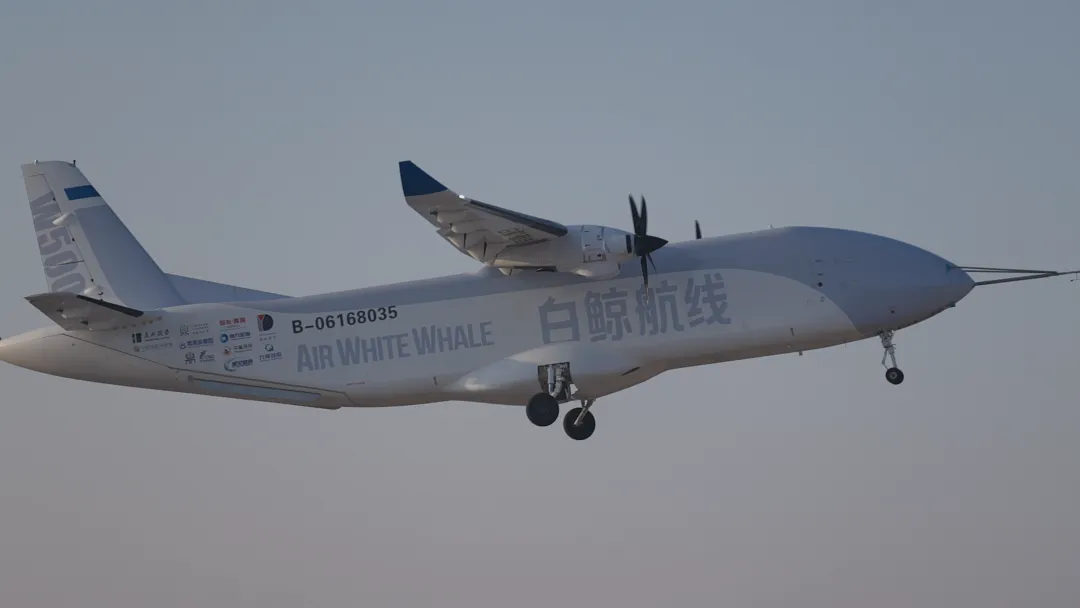
Beluga Airlines W5000 Completes Technical Verification Test Flight with ZT Technology Engine Vibration Isolation System
More



News

Space-Grade Silicone Rubber
As China's commercial spaceflight, satellite constellation deployment and deep-space exploration advance rapidly, spacecraft in-orbit service lifetimes continue to lengthen, placing higher demands on the in-orbit stability and environmental resistance of the non-metallic materials used alongside them.
To address the shortcomings of conventional silicone rubber — insufficient purification, high residual small-molecule content and a tendency to cause contamination and failure in orbit — as well as the industry's urgent need for domestically produced alternatives to high-end space-grade silicone rubber, we drew on years of experience in special elastomer materials to complete this technical breakthrough and successfully launch the high-performance ZT183 space-grade silicone rubber, which is suited to a wide range of complex spacecraft in-orbit conditions.
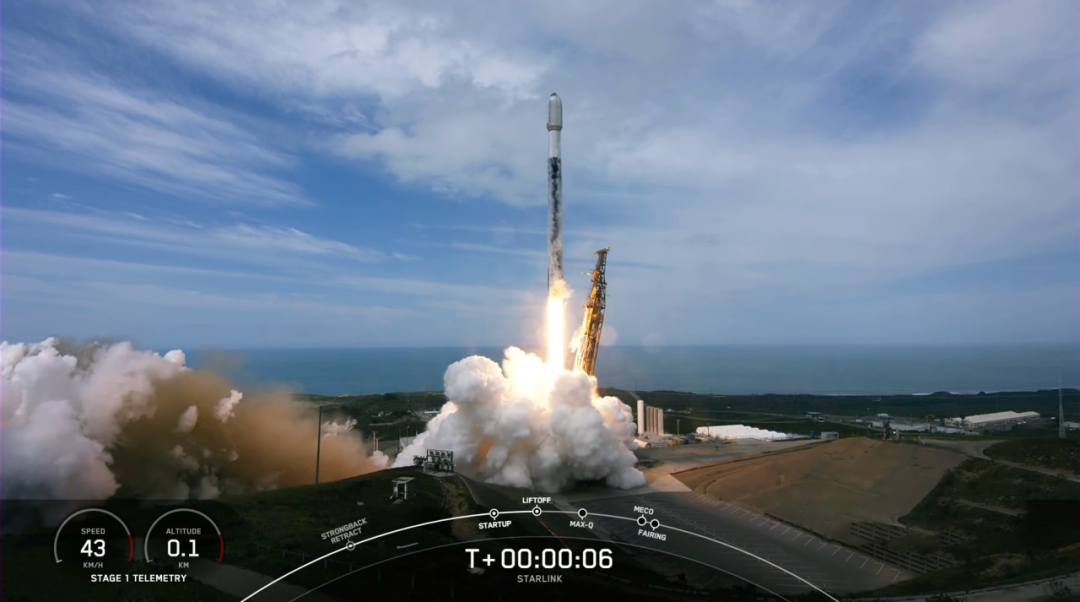
(Image sourced from the internet)
Key Performance Indicators of ZT183 Space-Grade Silicone Rubber:
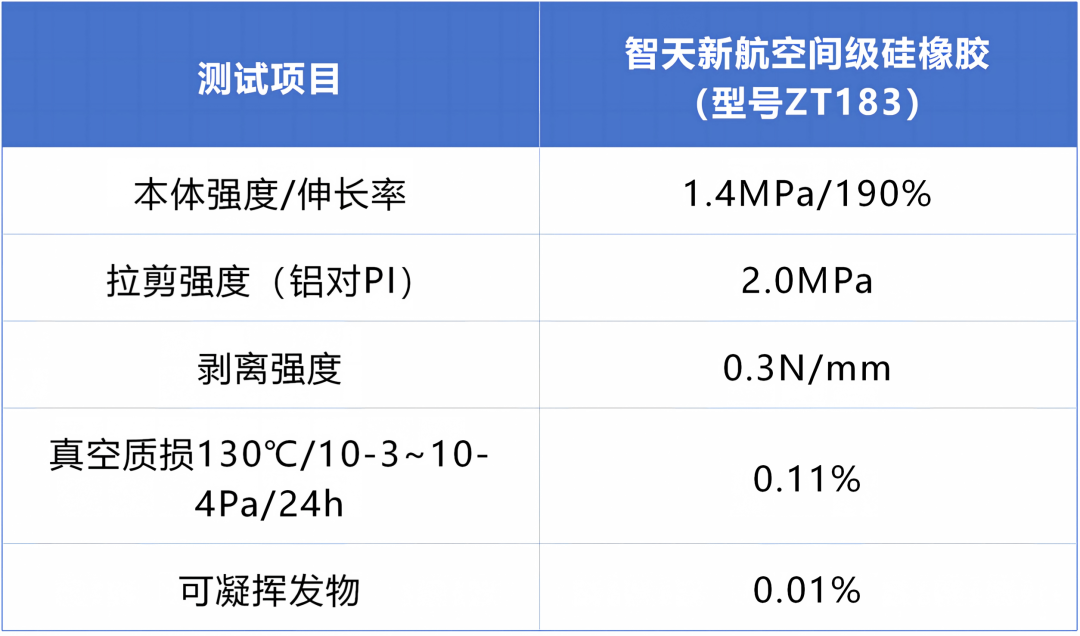
Table 1
01

The Space Service Environment and Material Challenges

(Image sourced from the internet)
Outer space presents multiple extreme conditions — high vacuum, atomic oxygen, radiation and wide temperature cycling. This harsh and complex service environment places extremely high demands on the environmental adaptability and long-term stability of materials used in spacecraft.
Space-grade silicone rubber is a high-purity silicone elastomer produced through a special purification process to meet aerospace low-outgassing standards, capable of long-term service in the combined vacuum, radiation and extreme-temperature environment of space.
Thanks to the inorganic nature of its Si-O-Si backbone and its elasticity across a wide temperature range, it is currently a widely used and irreplaceable elastomer among the non-metallic materials used in spacecraft.
Space-grade silicone rubber is used mainly in spacecraft, where various space environmental factors challenge the performance of silicone rubber from multiple dimensions:
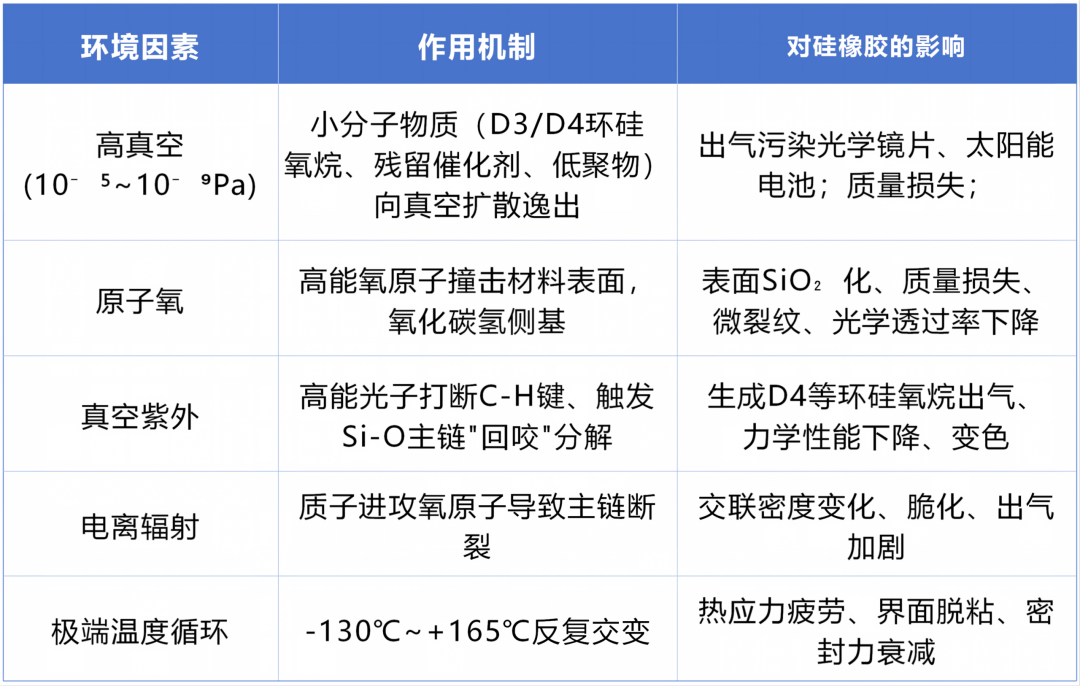
Table 2
Under the high-temperature, high-vacuum conditions of outer space, if silicone rubber contains small-molecule volatiles, these will outgas in the vacuum and can easily cause bonding failure and contamination of optical lenses and solar cells. Vacuum mass loss and collected volatile condensable material content are therefore key product performance indicators. According to the internationally accepted ASTM E595 standard, total mass loss must be under 1% and collected volatile condensable materials must be under 0.1%.
02

Performance Advantages of ZT183 Space-Grade Silicone Rubber
According to measured results (see Table 1), our independently developed ZT183 space-grade liquid silicone rubber has both total mass loss and collected volatile condensable material content far below the standard limits, with residual small molecules inside the material kept to a low level. It also offers excellent mechanical properties and bonding stability, effectively avoiding risks such as in-orbit outgassing contamination and bonding failure.
03

Main Application Scenarios
This space-grade liquid silicone rubber is designed mainly for two application directions: bonding and potting:
As a cell adhesive, it bonds solar cells to substrates and is also suitable for bonding polyimide (PI) thermal insulation film, aluminum skins and carbon fiber structures; as a coverglass adhesive, it is used for bonding solar cell coverglass and OSR (optical solar reflector) second-surface mirrors.
The product can also be used to pot relays, PCB circuit boards, connectors, pyrotechnic devices and other components, providing vibration damping, electrical insulation and moisture protection to withstand the vibration and shock of launch.

New aerospace materials are an important cornerstone of the independent and controllable development of the space industry, and the drive to localize special elastomer materials is vital to the safety and stability of long-term in-orbit missions for all types of spacecraft.
To meet the needs of China's spaceflight and deep-space exploration, ZT Technology will continue to deepen its R&D in space silicone materials, steadily improve the overall space-environment resistance of its products and expand its portfolio of special aerospace materials, supporting a self-reliant and stronger aerospace equipment supply chain with reliable domestically produced material solutions and contributing materials expertise to the high-quality development of China's space industry.
Author: Gan Zhiyong


Click the blue text to follow us