
2026.11.14
Beluga Airlines W5000 Completes Technical Verification Test Flight with ZT Technology Engine Vibration Isolation System
More



The Spacecraft's 'Flexible Armor' - Space-Grade Silicone Rubber
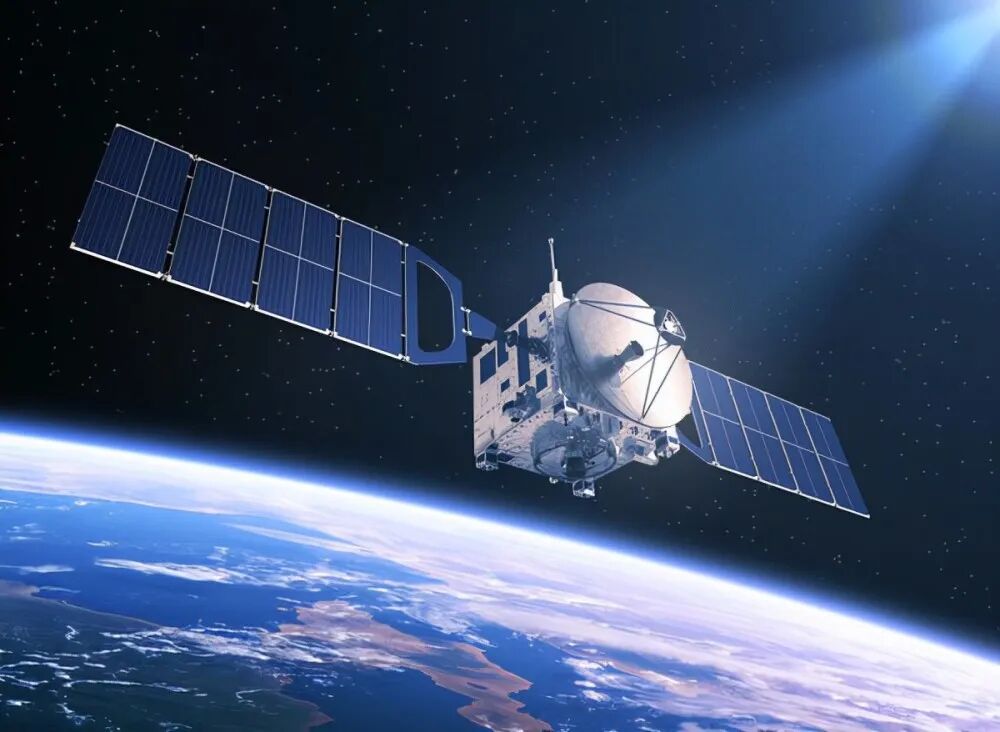
(Image source: internet)
As commercial spaceflight develops rapidly, spacecraft are staying in orbit longer than ever. Space is far from an ideal environment: high vacuum, atomic oxygen bombardment, radiation, and the drastic temperature differences brought by the day-night cycle constantly put every component to the test. While many people focus on rockets and satellite payloads, they easily overlook space-grade silicone rubber, an aerospace 'invisible guardian'.
Part.1
Extreme Space Environments Call for Special 'Flexible Armor'

Space-grade silicone rubbercan withstand extreme space environments chiefly because of its unique molecular structure.Its backbone consists of Si-O-Si siloxane bonds; the Si-O bond energy is far higher than the C-C bonds of ordinary polymers, giving it excellent thermal stability and chemical inertness. Moreover, the large bond angle of the siloxane linkage and the low rotational resistance of the molecular chain naturally provide elasticity over a wide temperature range, so the rubber retains its inherent toughness even under drastic temperature fluctuations.
To resist cosmic radiation and UV erosion, the formulation introduces phenyl side groups.The conjugated pi-electron system of the benzene ring absorbs and dissipates high-energy radiation, protecting the siloxane backbone from cleavage and suppressing chain degradation and crosslink embrittlement. In addition, phenyl groups disrupt chain regularity, preventing low-temperature crystallization so the product remains elastic even in deep-cold environments, comprehensively improving weatherability and anti-aging performance in space.
Part.2
Invisible Volatiles, Hidden In-Orbit Fatal Risks

Even with such an advantageous molecular foundation, as-synthesized silicone rubber feedstock still retains small-molecule cyclosiloxane impurities such as D3 and D4. These impurities have limited impact in terrestrial environments, but once in the high vacuum of space, the small molecules continuously outgas. Condensed volatiles deposited on solar cells and optical lenses directly cause power-generation efficiency losses and optical lens failure; combined with the synergistic erosion of atomic oxygen, UV, and ionizing radiation, the material accelerates embrittlement and cracking; and under repeated thermal cycling, fatal in-orbit failures such as interfacial debonding and seal failure can occur.
Therefore, minimizing small-molecule impurities to the extreme is an unavoidable hard threshold for a qualified space-grade silicone rubber.Under the widely used ASTM E595 aerospace standard, total mass loss in vacuum must be less than 1% and collected volatile condensable materials less than 0.1%. To deeply remove low-boiling cyclosiloxane impurities, conventional evaporation processes can no longer meet the requirements, molecular distillation purification technology has become the key solution.
Part.3
Process Breakthrough: Molecular Distillation Solves the Purification Challenge

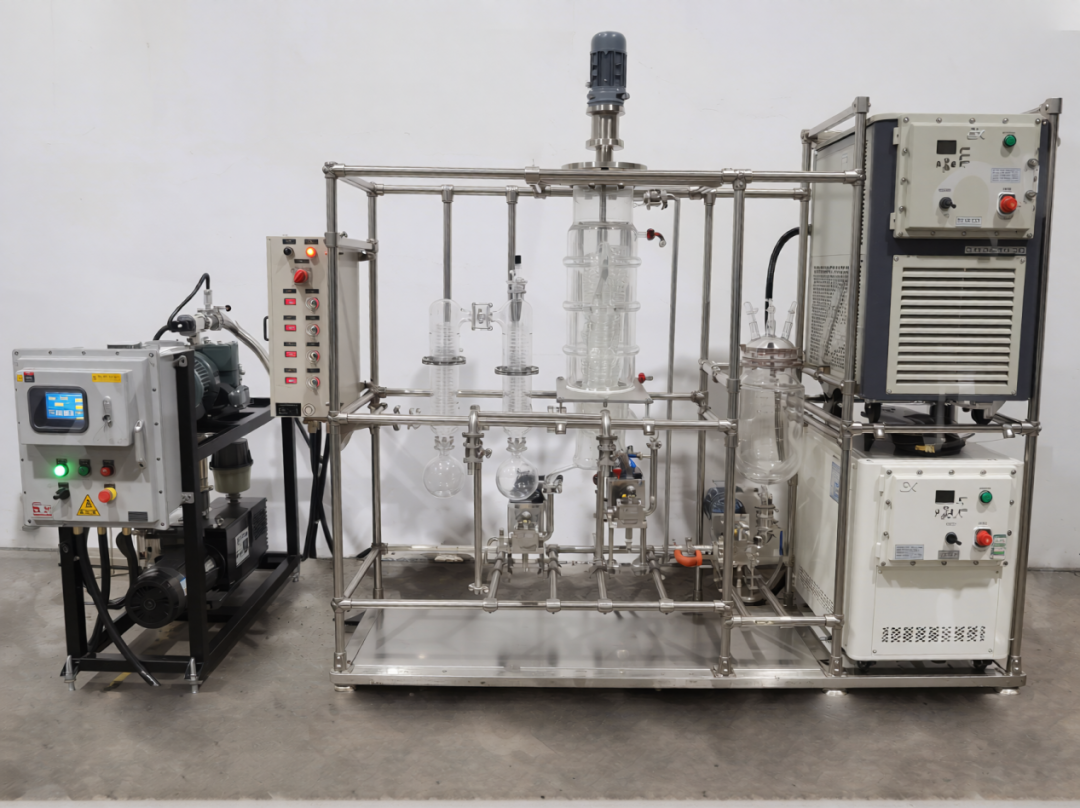
(Molecular distillation equipment)
In conventional kettle evaporation, the material remains as a large bulk liquid phase and only the portion near the vessel wall is heated. Small-molecule impurities must diffuse from within the colloid to the liquid surface before they can evaporate, and the mass-transfer boundary layer formed by the liquid film traps many small molecules inside the material, unable to escape. Raising the temperature or extending heating time to intensify purification instead triggers thermal degradation of the siloxane polymer and damages the rubber's mechanical properties,allowing only shallow impurity removal that cannot meet stringent aerospace specifications.
Molecular distillation achieves a breakthrough at the fundamental level of heat and mass transfer. The equipment's scraper spreads the silicone rubber feedstock into an ultra-thin turbulent film of 0.1-0.5 mm, greatly expanding the evaporation area. The system maintains a high vacuum, lowering the vaporization temperature of small molecules, and the material is heated for only a few seconds, fundamentally avoiding high-temperature degradation of the polymer matrix. The scraper continuously renews the film surface and breaks the mass-transfer boundary layer, so cyclosiloxanes and oligomers rapidly evaporate and separate; the light components are condensed and captured, while the intact polymer matrix is preserved. Without compromising the material's inherent properties, trace cyclic impurities are deeply stripped away, meeting the aerospace-grade standard for extremely low small-molecule residues.
Part.4
Domestic Breakthrough | ZT183 Delivers a Space-Grade Answer

Building on this core process, ZT Technology has independently developed ZT183 space-grade silicone rubber, using a self-synthesized modified polyorganosiloxane subjected to rigorous molecular distillation purification.
Measured vacuum mass loss is only 0.11% and condensable volatiles as low as 0.01%, both core indicators are substantially better than the ASTM E595 aerospace standard, while also delivering excellent mechanical properties and extensibility, solving the industry pain point of conventional silicone rubber - high residual small-molecule content and in-orbit contamination-induced failure - and providing a highly reliable, domestically produced material option for Chinese spacecraft.

From satellite constellations to deep-space exploration, many specialty materials like space-grade silicone rubber quietly become the spacecraft's 'flexible armor'.From modifying polysiloxane at the molecular level to deeply removing low-boiling impurities via molecular distillation, every step of technical development is aimed at adapting to the harsh conditions of space.
Rooted in China's specialty polymer sector, ZT Technology will continue to deepen the R&D and process iteration of space-grade silicone materials, refining products around the real operating conditions of spaceflight, and - through independent, controllable key materials - helping China's space program reach farther into the stars.
Author: Gan Zhiyong

Click the blue text to follow us