
2026.11.14
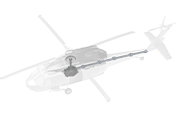
Beluga Airlines W5000 Completes Technical Verification Test Flight with ZT Technology Engine Vibration Isolation System
More



There are roughly 100,000 species of mold in nature, of which over
4
0,000 can attack industrial materials, and they are extremely widespread. When environmental conditions reach the temperature and humidity suitable for their growth (generally
24
°C to
31
°C, with humidity above
70%
), and sufficient nutrients (carbon sources, nitrogen sources and inorganic salts) are available, mold spores begin to germinate and grow.
China is a vast country lying along the western edge of the northern Pacific, stretching from near the Equator in the south to the Liaodong Bay of the Bohai Sea in the north, and spanning
3
climatic zones: temperate, subtropical and tropical. This warm, humid environment provides ideal conditions for mold to thrive. Various types of combat equipment kept in such conditions for long periods are vulnerable to mold attack, which can cause a range of damage and even lead to accidents.
The wings of the US Air Force's
C-130
,
KC135
and
B-52
aircraft were once severely corroded internally by Cladosporium and Pseudomonas aeruginosa. In the
20
th century, during the
70
s, mold damage to an aircraft system component in China caused a serious flight accident. Finding ways to prevent and control mold hazards is therefore essential to ensuring the reliability and safety of military equipment.

Rubber materials offer a range of excellent properties and are widely used in military applications. Rubber vibration isolators, for example, provide vibration damping and shock resistance in weapon systems, reducing the transmission of vibration caused by mechanical motion. Rubber seals can be used at critical connection points in military equipment, such as the joint between a gun barrel and bolt, to ensure tight sealing and keep out moisture, dust and other contaminants.

However, rubber products are susceptible to mold attack in warm, humid environments. When exposed to high humidity, abundant oxygen and suitable temperatures, mold can grow on their surface and release enzymes that break down the material and use it as a nutrient. This can alter the rubber's structure, degrade its physical and chemical properties, and even damage the product; metabolites secreted by the mold can also corrode metals and etch glass. To improve the overall mold resistance of equipment, materials with good mold resistance should be selected at the design stage, and appropriate mold tests should be carried out during material and equipment development, design finalization and service to gather the information needed to evaluate mold resistance.
ZT Technology has successfully developed a new anti-mold, corrosion-resistant rubber material:
Under the mold test conditions specified in
GJB150 10A
, an
84d
test was conducted and achieved a Grade
0
mold-resistance rating.
Test strains: Aspergillus niger, Aspergillus terreus, Paecilomyces variotii, Penicillium funiculosum, Penicillium ochrochloron, Scopulariopsis brevicaulis and Trichoderma viride.
Test results: no mold growth was observed on the material surface, and the physical and chemical properties of the material showed no significant change.
This rubber material incorporates advanced anti-mold technology and resists a wide range of common molds, particularly Scopulariopsis brevicaulis, while also delivering excellent weatherability and chemical corrosion resistance.
This technological innovation has not only withstood rigorous laboratory testing, passing the mold test (Grade
0
) on the first attempt, but has also been proven through multiple real-world applications to deliver stable performance in extreme environments. This means military equipment can continue to perform excellently even in harsh conditions such as high humidity and high temperature.
The new anti-mold, corrosion-resistant rubber material developed by ZT Technology can be widely used in applications with demanding mold and corrosion resistance requirements. As the industry continues to grow and demands ever higher material quality and performance, we will help drive the sector forward with outstanding technical expertise and a spirit of innovation.